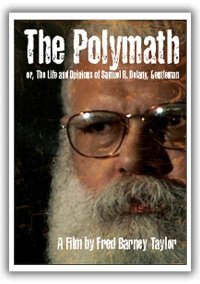
 The SoHo Gallery for Digital Art, which has already expanded its offerings by hosting sf readings, including the upcoming NYRSF reading series entry, is now moving into films of interest to the sf community. Specifically, on Tuesday 9 March, at 6:30PM, the gallery will host a screening of Fred Barney Taylor’s 2007 film The Polymath, or The Life and Opinions of Samuel R. Delany, Gentleman. Following the film, Delany himself will speak, and following his talk will be a special screening of The Orchid, a short film Delany himself directed. Tickets to the event are $9.
Gallery maestro John Ordover offers these words from Jon Gartenberg about the film:
“A prolific and award-winning author, Samuel R. Delany created works in numerous literary forms and genres, including science fiction (Dhalgren), memoirs of life in New York City (The Motion of Light in Water; Times Square Red, Times Square Blue) and several issues of the Wonder Woman comic book series. This portrait by accomplished experimental filmmaker Taylor is structured as a novella, with sections segmented by chapter titles. Within each section, Delany, who is also African American and gay, freely expounds upon a variety of diverse subjects, including literary metaphors, racism and violence, economic and social history, family background and his sexual escapades. Taylor counterpoints his literary subject and the novella-like structure of the film with abundant shots of cityscapes of New York and footage from Delany’s family home movies, making great use of both the Brooklyn Bridge and the East River as central visual motifs. These images reflect Delany’s autobiographical work, The Motion of Light in Water, in which oceans suggest the impermanence of time, and bridges suggest the transition between two shores. Acting as metaphors for Delany’s entire life, which constantly defines itself in the active traversing of boundaries—between high and low art, marriage and same-sex relations, narrative and textual innovations—these concepts let us, the spectators, recast our own perceptions of the world in which we live.”